Introducing Flexible Webhook: From Simple Alerts to Powerful Automation

TL;DR
- Nodit Webhook v2 (Flexible Webhook) is now live
- Move beyond basic event notifications to fully customizable data delivery units
- 5 key enhancements powered by PULSE strategy:
- Advanced Condition Builder – Field-level filters with CEL-based DSL
- Template Library – Pre-built patterns for common use cases
- Live Testing – Verify webhook behavior with real-time data before deployment
- Output Field Control – Send only the data you need
- Selective Resend – Retry individual webhook calls without reprocessing
- Build smarter workflows without additional development overhead
Greeting Builders,
At Nodit, we believe that infrastructure should adapt to your workflow, not the other way around. For too long, webhooks have been treated as simple notification pipes: they fire, they deliver a payload, and that's it. But as Web3 applications grow more sophisticated, developers need webhooks that can think, filter, and deliver precisely what's needed.
Today, we're excited to announce Nodit’s new Flexible Webhook (Webhook v2), a complete reimagining of how blockchain event delivery should work. This isn't just an update — it's a fundamental shift from webhooks as passive triggers to webhooks as designable, intelligent data delivery units.
Why We Built Flexible Webhook
The limitations of traditional webhooks became clear as we listened to our developer community:
- Limited filtering: Simple field matching wasn't enough for complex conditional logic
- No data control: Receiving entire raw payloads meant extra processing overhead
- Blind deployment: No way to test webhook behavior before going live
- Rigid structure: Every use case required custom backend code
- Difficult debugging: When something failed, retry meant reprocessing everything
These weren't just inconveniences — they translated to wasted compute resources, increased latency, and unnecessary development cycles. We knew there had to be a better way.
Meet GotchaPulse: The PULSE Strategy
Flexible Webhook introduces five core capabilities that give you complete control over your event-driven workflows. We call it the PULSE strategy:
⚡P – Precise Condition Builder
Define exactly when webhooks should fire using field-level conditions, operators, and complex logical grouping.
- Visual Mode: No-code interface with drag-and-drop condition builder
- Text Mode: Direct CEL (Common Expression Language) expression editing
- Seamless conversion between both modes
- Support for AND/OR logic groups:
((A AND B) OR (C AND D))
Example: Trigger only when block.number > 19758850 AND gas_used > 20000000
📋U – Usable Templates
Jump-start your webhook setup with pre-built templates for common patterns.
- Token burn detection
- Whale transfer monitoring
- High-value transaction alerts
- Custom contract event tracking
Just select a template, adjust a few values, and deploy.
🧪 L – Live Testing
Verify your webhook logic before deployment using real blockchain data.
- Example Data Preview: See actual recent events from your selected stream
- Test Webhook: Send a test payload to your endpoint and verify the response
- Instant validation: Catch configuration errors before they reach production
No more guessing — see exactly what data will be delivered.
🎯 S – Selective Output Fields
Choose which fields to include in the webhook payload.
- Reduce payload size by up to 90% for large events (e.g., Solana blocks, EVM logs)
- Lower bandwidth costs and processing overhead
- Fields used in filter conditions are automatically locked to prevent errors
Perfect for high-throughput environments where every byte counts.
🔁 E – Easy Resend
Retry individual webhook calls without reprocessing the entire event stream.
- Select any failed call from history
- Resend with a single click
- Track resend attempts separately
Pinpoint recovery instead of bulk retries.
Built on CEL: A Battle-Tested Expression Language
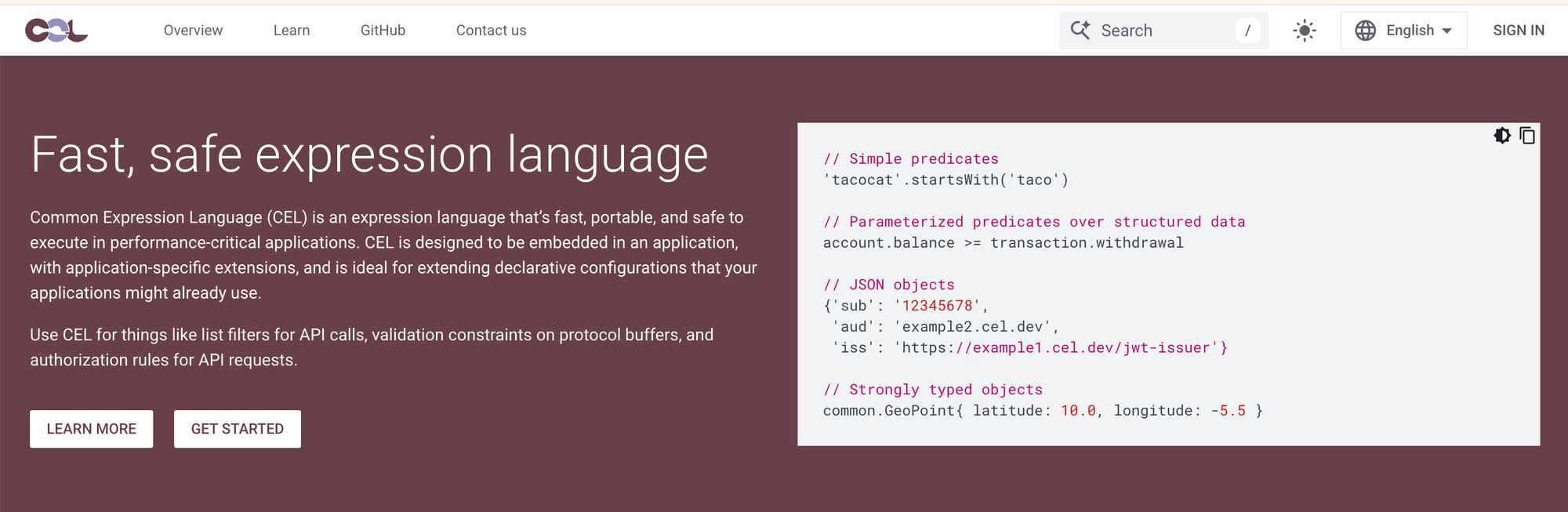
One of the most powerful aspects of Flexible Webhook is its foundation on Google CEL (Common Expression Language). CEL is the same expression language used by Google Cloud Eventarc, Kubernetes, and Envoy for event filtering.
Why CEL?
- Familiar syntax: C-like expressions that are easy to read and write
- Type-safe: Operators are automatically scoped to field types
- Fast evaluation: Sub-microsecond performance
- Industry-proven: Used in production by major cloud platforms
If you've written queries in Kibana or Grafana, the experience will feel instantly familiar. And because CEL is an open standard, you can reuse the same filtering logic across different parts of your infrastructure.
Real-World Impact
Let's look at a practical example. Suppose you're building a DeFi monitoring dashboard that needs to track large ERC20 transfers ("whale movements") above $1M equivalent.
Before Flexible Webhook:
- Subscribe to all ERC20 transfer events
- Receive thousands of webhook calls per minute
- Filter in your backend code
- Discard 99%+ of events
- Parse full raw payloads even when you only need 3-4 fields
With Flexible Webhook:
- Set condition:
value > 1000000000000000000(1M in wei) - Add additional filter:
token in ["0xA0b8...", "0xdAC1..."](USDC, DAI) - Select output fields:
from,to,value,token - Test with live data
- Deploy
Result: 99% fewer webhook calls, 90% smaller payloads, and zero backend filtering code.
Flexible Webhook vs. Traditional Webhooks
| Feature | Traditional Webhook | Flexible Webhook |
|---|---|---|
| Condition Logic | Simple field matching | CEL-based expressions with AND/OR grouping |
| Output Control | Full raw payload only | Select specific fields |
| Pre-deployment Testing | ❌ Not available | ✅ Live data preview + test send |
| Templates | ❌ Manual setup each time | ✅ Pre-built patterns |
| Selective Retry | ❌ Reprocess entire stream | ✅ Resend individual calls |
| Visual Builder | ❌ Text configuration only | ✅ Visual + text modes |
Getting Started with Flexible Webhook
Flexible Webhook is now available in the Nodit Console. Here's how to create your first intelligent webhook:
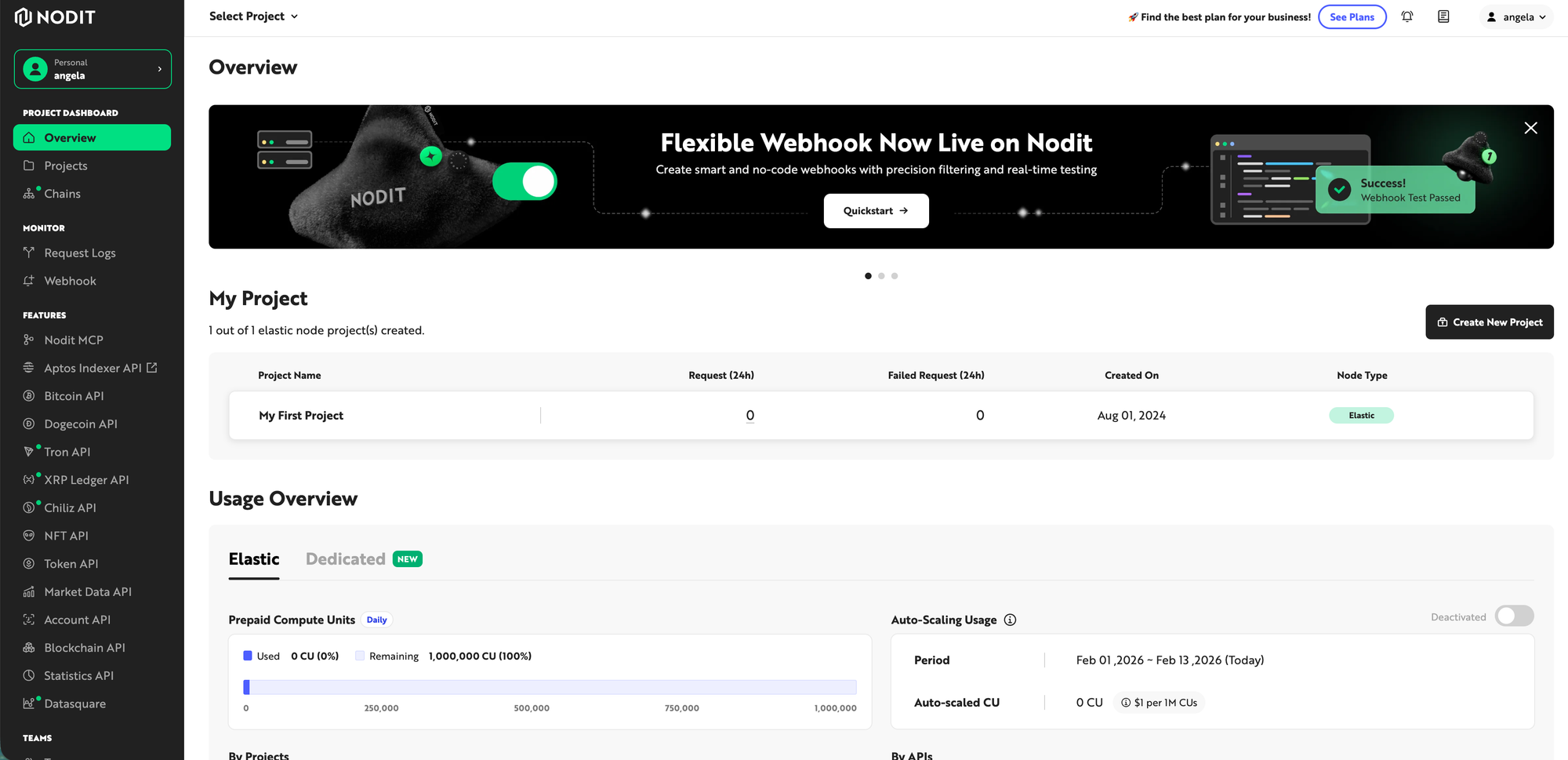
Step 1: Select Your Chain and Stream
Choose the blockchain network (currently supporting EVM chains and Aptos) and the event stream you want to monitor (e.g., ERC20 Transfer, Block, Transaction).
Step 2: Build Your Conditions
Use the Visual Builder to add conditions:
- Click Add Condition to create a new filter
- Select a field, operator, and value
- Use Add Group for complex logic
- Or switch to Text Mode to write CEL expressions directly
Step 3: Choose Output Fields
Expand the Receive Fields section and select only the fields you need. Fields used in your conditions are automatically included and locked.
Step 4: Test Before You Deploy
- Click Live Data Preview to see real event samples
- Click Test Webhook to send a test payload to your endpoint
- Verify the structure and content
Step 5: Create and Monitor
Enter your webhook name and URL, then click Create Webhook. You can monitor all webhook calls in the Call History tab, with full request/response details and one-click resend for any failed calls.
What's Next: The Future of Flexible Webhook
This is just the beginning. We're already working on the next phase of enhancements:
- Custom stream sources: Define your own event streams beyond pre-configured blockchain events
- Multi-chain correlation: Trigger webhooks based on conditions across multiple chains
- Extended output channels: Support for message queues, serverless functions, and event platforms beyond HTTP webhooks
- Advanced templates: Community-contributed patterns for popular DeFi protocols, NFT marketplaces, and more
Our vision is to evolve Flexible Webhook from a blockchain event delivery tool into a universal data stream routing platform that works seamlessly across Web3 and Web2.
Migration from Webhook v1
If you're currently using Webhook v1, don't worry — we've got you covered:
- Webhook v1 remains operational for a limited transition period
- You can continue using existing v1 webhooks while you migrate
- All new webhooks must be created in v2
- Check out our guide for step-by-step instructions
We recommend migrating at your earliest convenience to take advantage of the new capabilities and improved reliability.
Ready to Build Smarter Workflows?
Flexible Webhook represents a fundamental shift in how developers should think about blockchain event delivery. Instead of building custom filtering and processing logic in your backend, let your infrastructure do the heavy lifting.
Whether you're building a trading bot, a portfolio tracker, an on-chain analytics platform, or a DeFi protocol monitor, Flexible Webhook gives you the precision and control you need — without the overhead.
Start building today with Flexible Webhook in the Nodit Console.
🔎About Nodit
Nodit is a platform that provides reliable node and consistent data infrastructure for scaling your dapps in a multi-chain environment. The core technology of Nodit is a data pipeline that performs crawling, indexing, storing, and processing of blockchain data, along with a reliable node operation service. With processed blockchain data, developers can leverage on-chain and off-chain integration, advanced analytics and visualization, and even AI modeling to build exceptional Web3 products.
Homepage l X (Twitter) l Linkedin
Join us and build more👊🏻