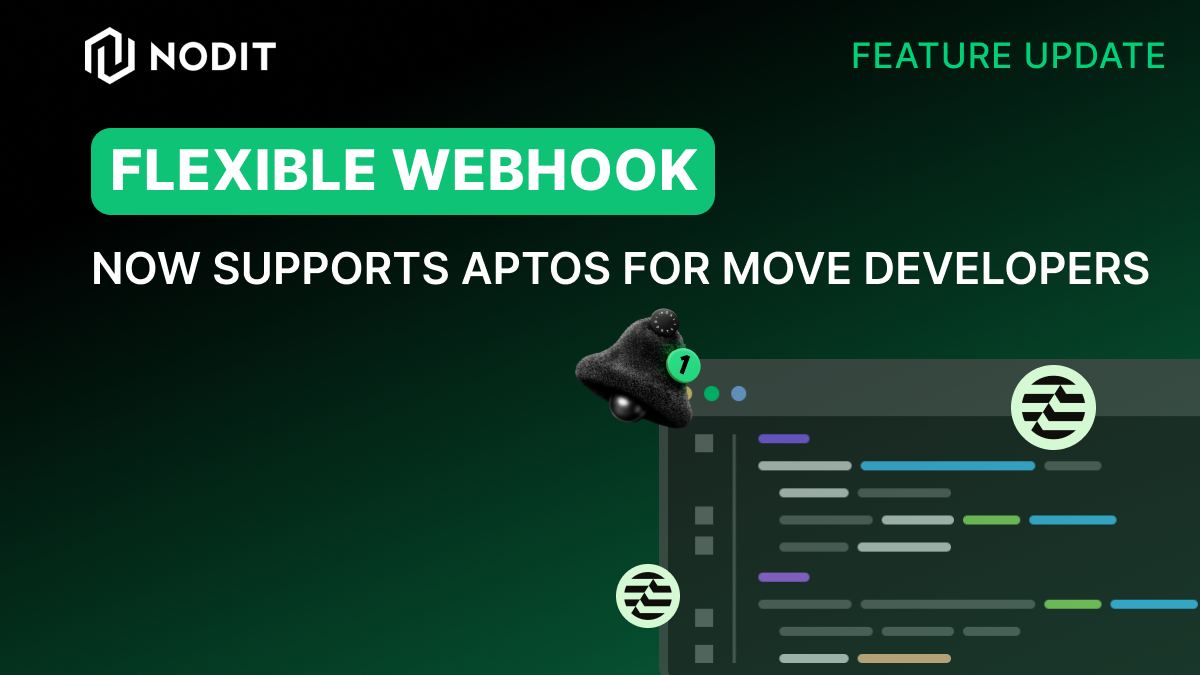
Feature Update: Flexible Webhook Now Supports Aptos for MOVE Developers

TL;DR
- Nodit's Flexible Webhook now supports Aptos, bringing full event-driven automation to MOVE developers
- Configure precise webhook triggers using CEL expressions on Aptos on-chain data — no custom backend filtering required
Greeting Builders,
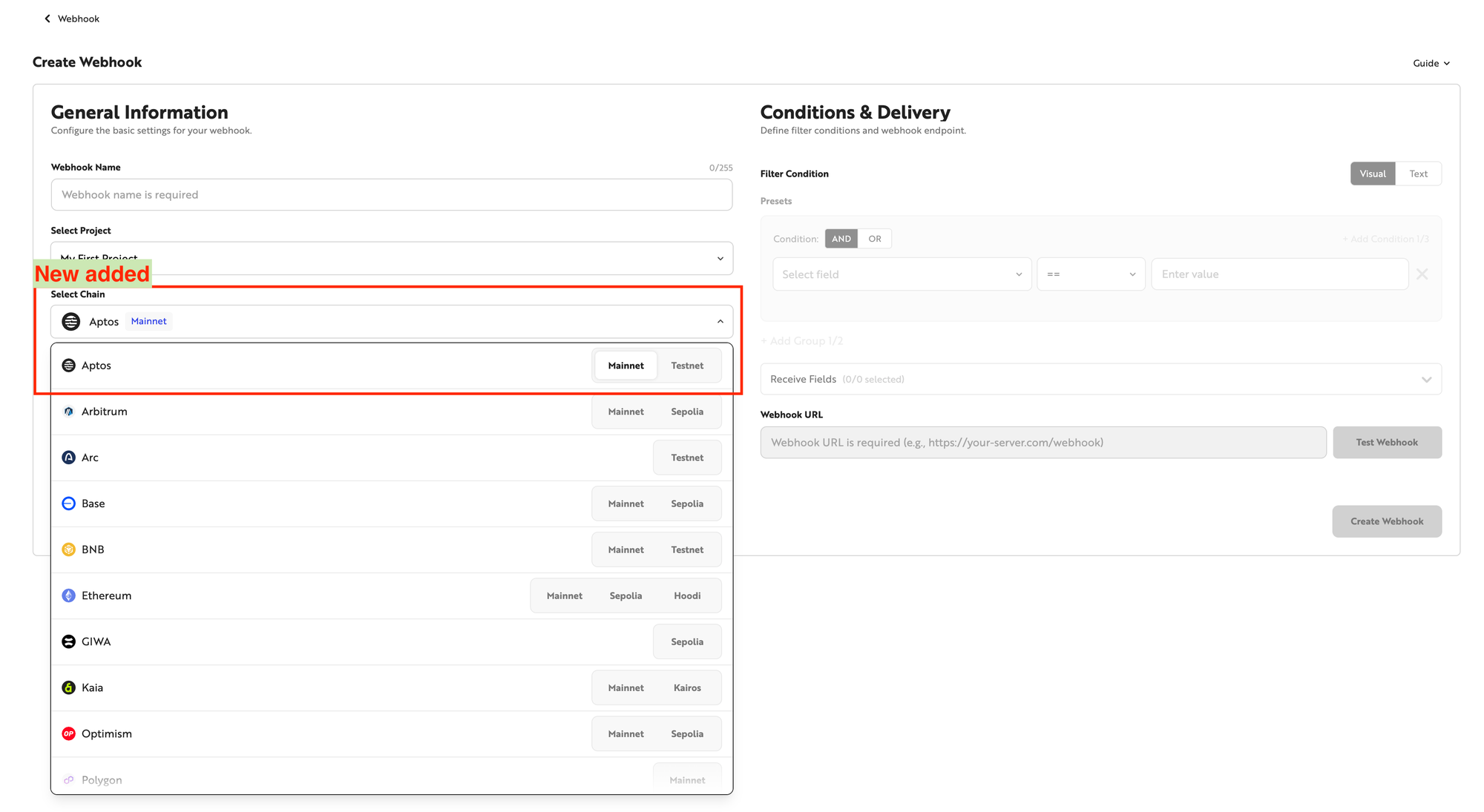
Nodit's Flexible Webhook has been updated after a month. Aptos is now a supported chain, and MOVE developers can take full advantage of the same intelligent, customizable webhook infrastructure already available on EVM chains.
For a full introduction to Flexible Webhook and its PULSE capabilities, refer to the original release post:
 Nodit Team
What This Update Means for MOVE Developers
With Aptos now integrated into Flexible Webhook, developers building on the MOVE ecosystem can monitor on-chain activity with the same level of precision and control available on EVM chains without writing custom backend filtering logic.
Here is what you can do with Flexible Webhook on Aptos:
- Monitor specific transaction events — Track events emitted by any Aptos’s Module using the
eventsfield, which includes event type, account address, sequence number, and event-specific data such as token amounts and store addresses. - Track transactions by type — Set conditions across all four supported Aptos transaction types:
user_transaction,block_metadata_transaction,block_epilogue_transaction,validator_transaction. - Filter by execution status — Use the
successfield to receive only confirmed successful transactions, or monitor failed ones using thevm_statusmessage from the Move VM. - Monitor gas consumption — Set threshold conditions on
gas_usedto detect high-cost transactions or abnormal network activity - Track block-level activity — Use
block_heightandblock_timestampas filter conditions to scope webhook triggers to specific time windows or chain ranges. - Select only the fields you need — From the full transaction schema — including
hash,sender,payload,signature,events, and more — choose only what your application requires, reducing payload size and eliminating unnecessary parsing. - Test before setting— Use Live Sample to preview real Aptos on-chain data and Test Webhook to validate your endpoint response before going live.
- Manage delivery history from the console — View all webhook calls and resend individual failed deliveries with a single click.
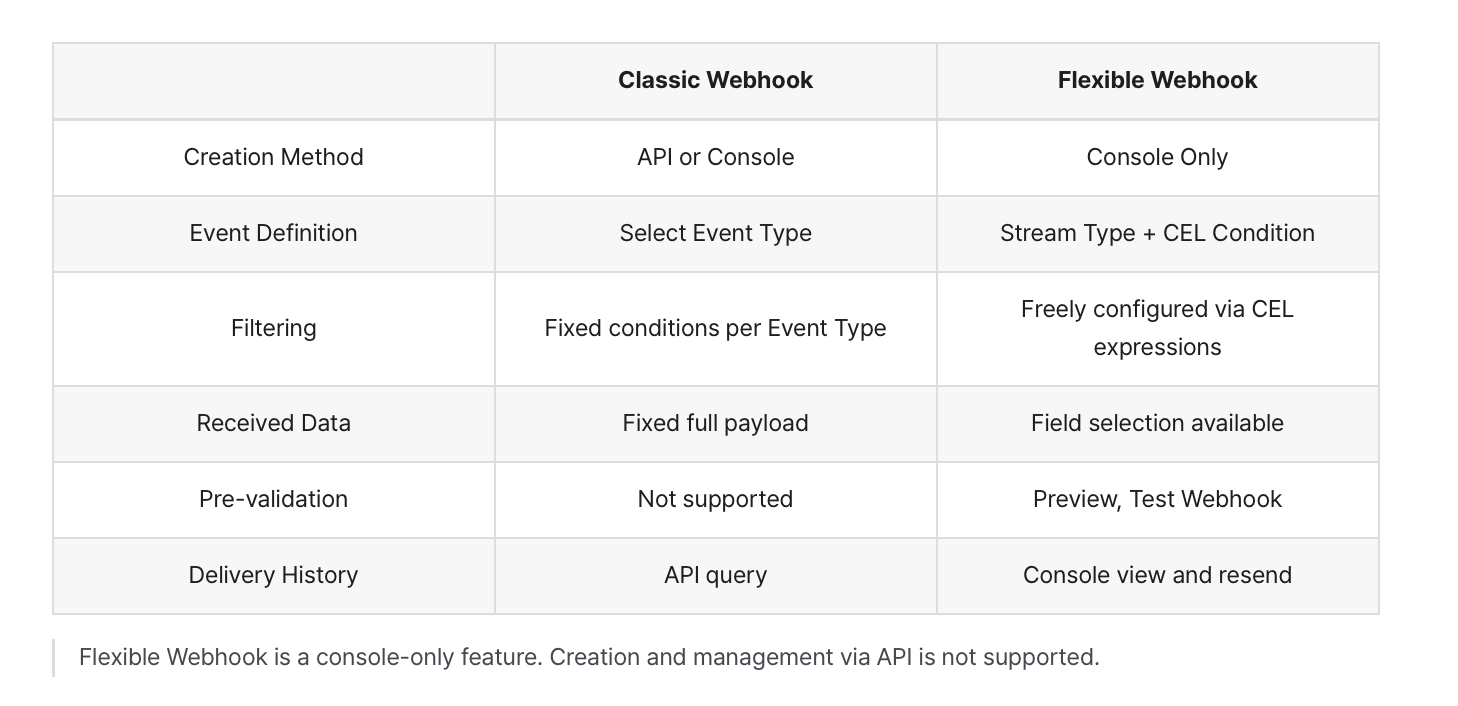
Flexible Webhook vs. Classic Webhook
Flexible Webhook is a separate product from Nodit's Classic Webhook. Here is how they compare:
Building a Better Environment for Every Developer
The addition of Aptos to Flexible Webhook is part of a broader commitment at Nodit: to ensure that developers across every major ecosystem have access to the same quality of infrastructure, tooling, and developer experience — regardless of the chain they build on.
MOVE developers have long worked with powerful primitives in the Aptos ecosystem. With Flexible Webhook now available on Aptos, they can connect those on-chain events to real-world workflows with the same precision and flexibility available on EVM chains — without writing custom filtering logic, managing brittle alert systems, or processing unnecessary data.
At Nodit, we keep to expand our chain coverage, improve tooling, and reduce the friction between blockchain infrastructure and the applications built on top of it. Aptos support for Flexible Webhook is one step in that direction. More updates are on the way.
🔎About Nodit
Nodit is an enterprise-grade Web3 platform that provides reliable node and consistent data infrastructure to support the scaling of decentralized applications in a multi chain environment. The core technology of Nodit is a robust data pipeline that performs the crawling, indexing, storing, and processing of blockchain data, along with a dependable node operation service. Through its new Validator as a Service (VaaS) offering, Nodit delivers secure, transparent, and compliant validator operations that ensure stability, performance visibility, and regulatory assurance.
By utilizing processed blockchain data, developers and enterprises can achieve seamless on chain and off chain integration, advanced analytics, comprehensive visualization, and artificial intelligence modeling to build outstanding Web3 products.