Hong Kong’s Stablecoin Issuers Licensing Is Coming — Is Your Web3 Infrastructure Ready?
TL;DR
- Hong Kong is preparing to launch its stablecoin licensing regime, accelerating the development of a regulated digital asset ecosystem.
- Institutions seeking a stablecoin issuer license will need infrastructure that supports operational resilience, security, governance, and auditability.
- The HKMA Stablecoin Issuer Guidelines emphasize requirements such as operational risk management, business continuity, data protection, and internal controls.
- Meeting these expectations requires institutional-grade blockchain infrastructure, including dedicated nodes, reliable real-time data access, and secure system architecture.
- Nodit supports institutions preparing for this transition with SOC 2 Type II–compliant infrastructure, dedicated node environments, and experience serving leading exchanges and financial infrastructure providers.
Infrastructure Readiness for Hong Kong’s Tokenization Phase
Hong Kong’s digital asset market is entering a critical stage of development.
 Nikhilesh De
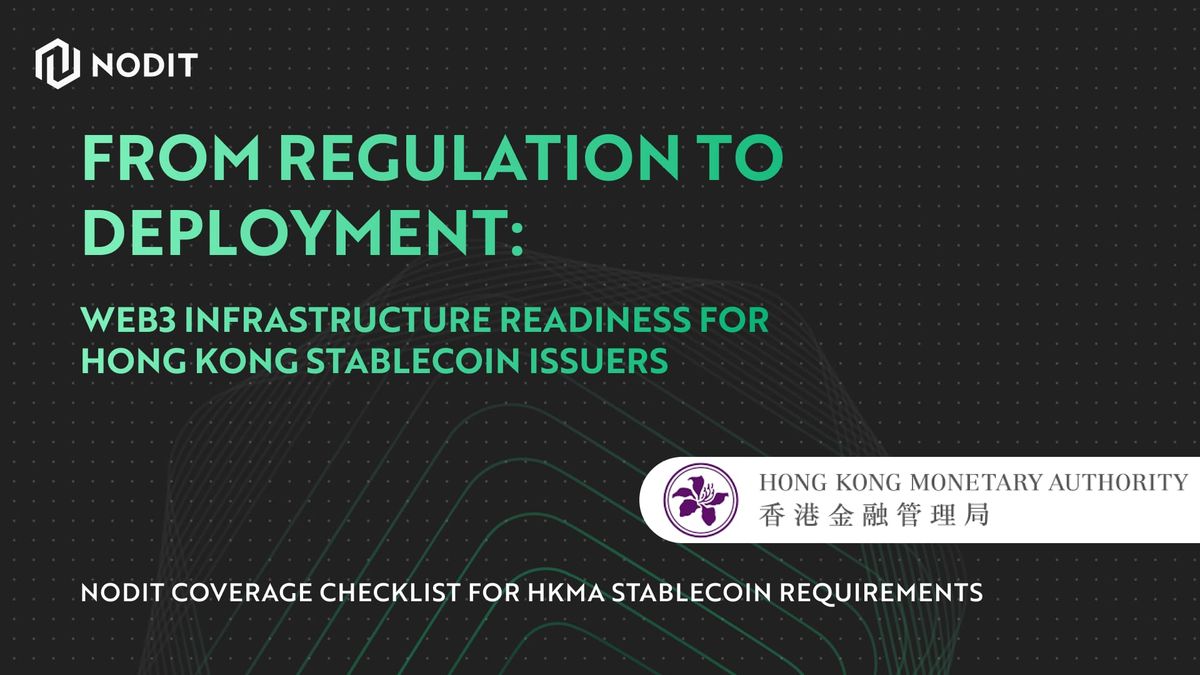
With the Hong Kong Monetary Authority (HKMA) preparing to issue the first licenses for fiat-referenced stablecoin issuers in this month, the conversation around tokenization is shifting. The central question is no longer whether tokenized financial systems will emerge, but whether the infrastructure supporting these systems is sufficiently mature to support institutional-scale operations.
Rethinking Tokenization
Tokenization is more than a technological enhancement. It represents a broader shift in how financial systems may be structured and executed in the next generation.
At its core, tokenization reflects a search for financial infrastructure that is more programmable, transparent, and globally interoperable. Blockchain is no longer simply an enabling tool operating quietly in the background. It is increasingly becoming the execution layer upon which new financial models are being built.
Following our time at Consensus Hong Kong 2026 last month, one observation became increasingly clear: Hong Kong’s regulatory momentum is accelerating this transition.
 Nodit Team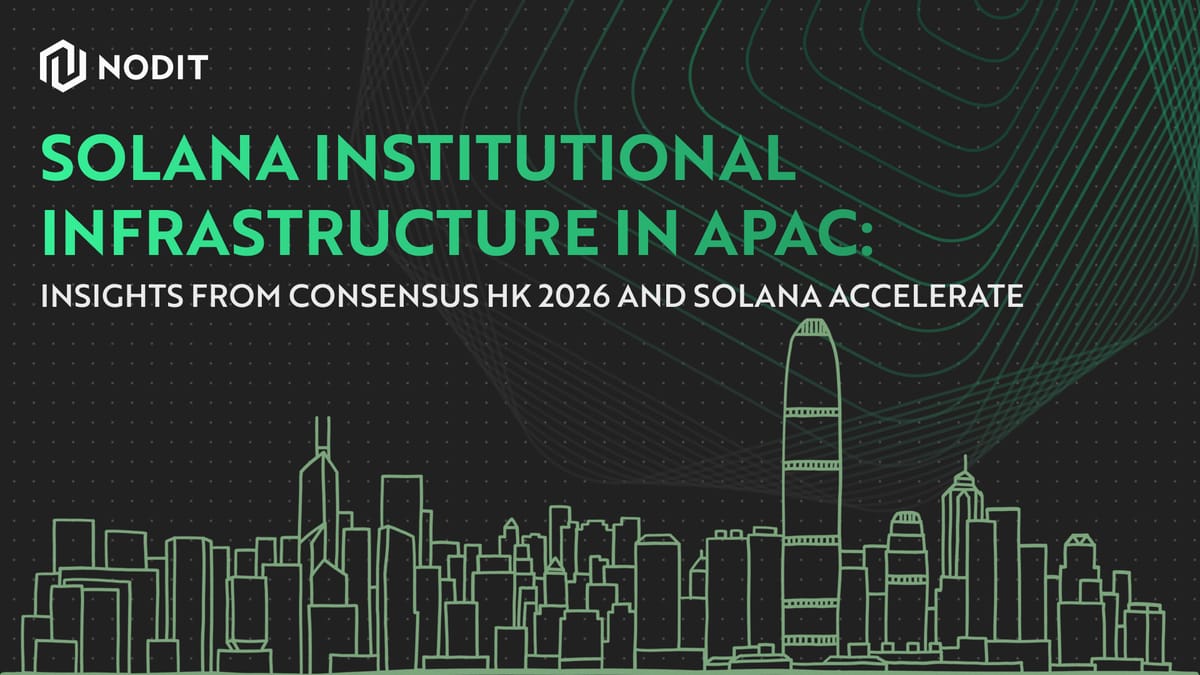
With the upcoming issuance of licenses for fiat-referenced stablecoin issuers, the city is signaling a strong commitment to developing an institutional-grade digital asset ecosystem. For large enterprises and financial institutions, this creates a clearer pathway to explore emerging asset categories such as real-world assets (RWA) and tokenized financial instruments within a regulated environment.
The Hong Kong Monetary Authority’s launch of the Project Ensemble Sandbox in August 2024 further illustrates this direction. Rather than focusing on a single application, Hong Kong is advancing tokenization across multiple financial domains — including payments infrastructure, asset management, and settlement experimentation — all under regulatory oversight.
Taken together, these developments suggest that tokenization is not simply a passing market narrative. It is gradually becoming part of the structural evolution of capital markets.
Operation Readiness in the Tokenization Era
As financial institutions enter the businesses of stablecoins, RWA, and digital payments, the requirements extend far beyond product design.
Operating in these areas demands institutional-grade foundations: independent security audits, robust internal controls, and compliance-ready governance structures. It also requires secure and resilient cloud infrastructure capable of safeguarding sensitive financial data at scale. Equally critical is access to fast, reliable, real-time data. Stablecoin settlement, tokenized asset transfers, and on-chain payments operate continuously — 24/7, without downtime. Latency is not simply a performance issue; it directly impacts execution quality, reconciliation accuracy, and risk exposure.
Reliability is no longer measured solely by uptime. It increasingly encompasses deterministic system behavior, transport-layer stability, audit traceability, and consistent real-time data delivery.
In the next phase of digital finance, infrastructure standards will not merely rise. They will begin to define what operational readiness truly means.
Web3 Infrastructure Considerations Under the HKMA Stablecoin Guidelines

The HKMA Guideline on Supervision of Licensed Stablecoin Issuers provides a clear indication of the operational standards expected from institutions entering the regulated stablecoin ecosystem.
Beyond reserve management and redemption requirements, the framework also highlights the importance of robust operational infrastructure.
These expectations translate directly into practical infrastructure considerations for institutions preparing to operate stablecoin systems.
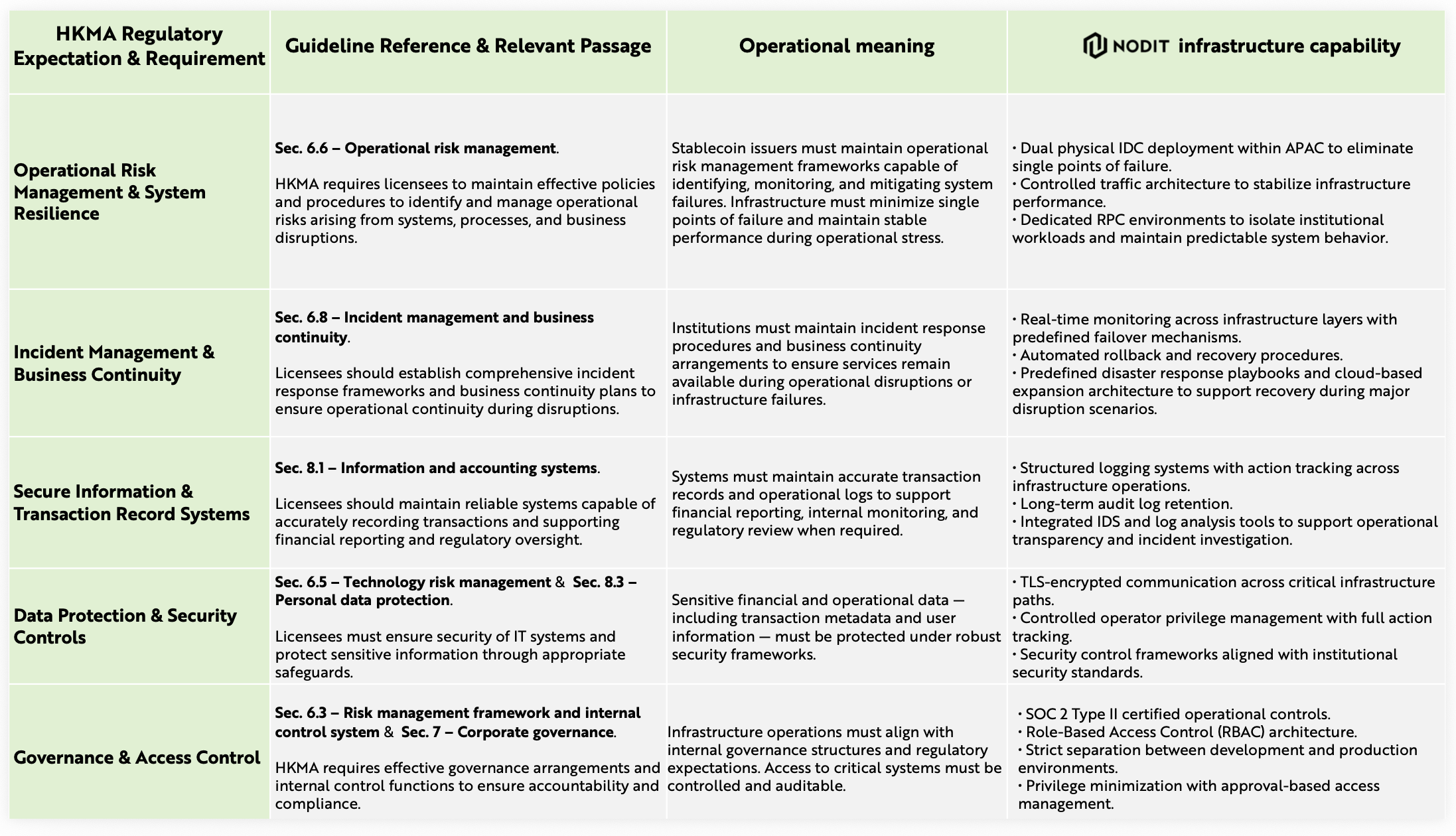
For institutions preparing to apply for Hong Kong’s stablecoin issuer license, regulatory expectations extend beyond governance policies and compliance documentation. Stablecoin systems must support ownership tracking, settlement processes, custody arrangements, and regulatory oversight in ways that operate synchronously, verifiably, and transparently across the underlying technology stack.
This is why infrastructure should include system redundancy, operational monitoring, auditability, and access governance, as it becomes a foundational component of stablecoin operations within a regulated framework.
Establishing these capabilities early can help institutions align their technical environments with the operational resilience, transparency, and accountability standards expected by regulators.
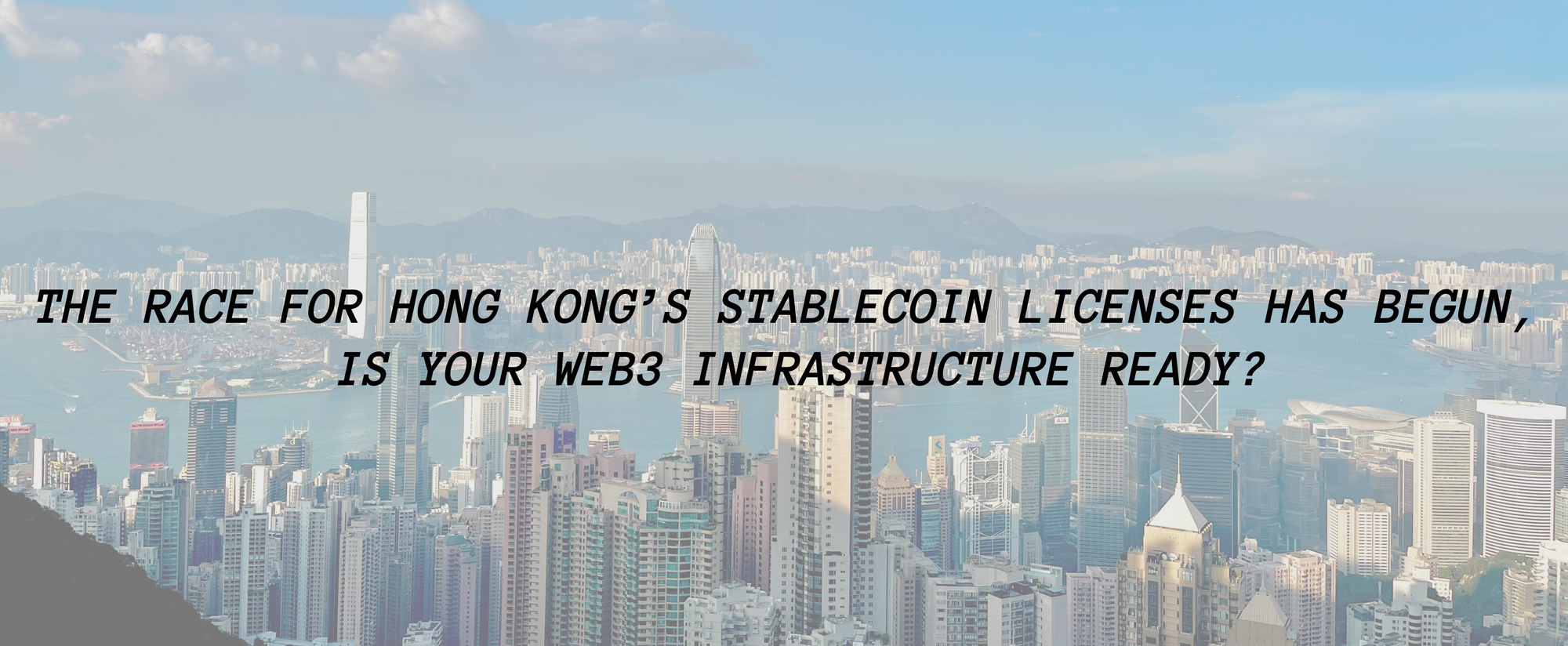
Web3 Infrastructure for Institutional Readiness: 5 Reasons to Work with Nodit
Ensuring these capabilities early can help institutions align their technical environments with the operational resilience and transparency standards expected by regulators.
For many institutions entering the digital asset ecosystem, building and operating blockchain infrastructure internally may not always be practical. Instead, organizations often work with infrastructure providers that have experience supporting institutional workloads, financial-grade security requirements, and regulated operational environments.
1.Experience Supporting Institutional Digital Asset Infrastructure
Nodit provides institutional-grade blockchain infrastructure developed through extensive experience serving the Korean financial and digital asset ecosystem. The platform operates dedicated node infrastructure for leading Korean exchanges such as Upbit and Coinone, supporting high-performance blockchain connectivity and reliable access to on-chain data for large-scale institutional operations.
- Case study related to Upbit:
 Nodit Team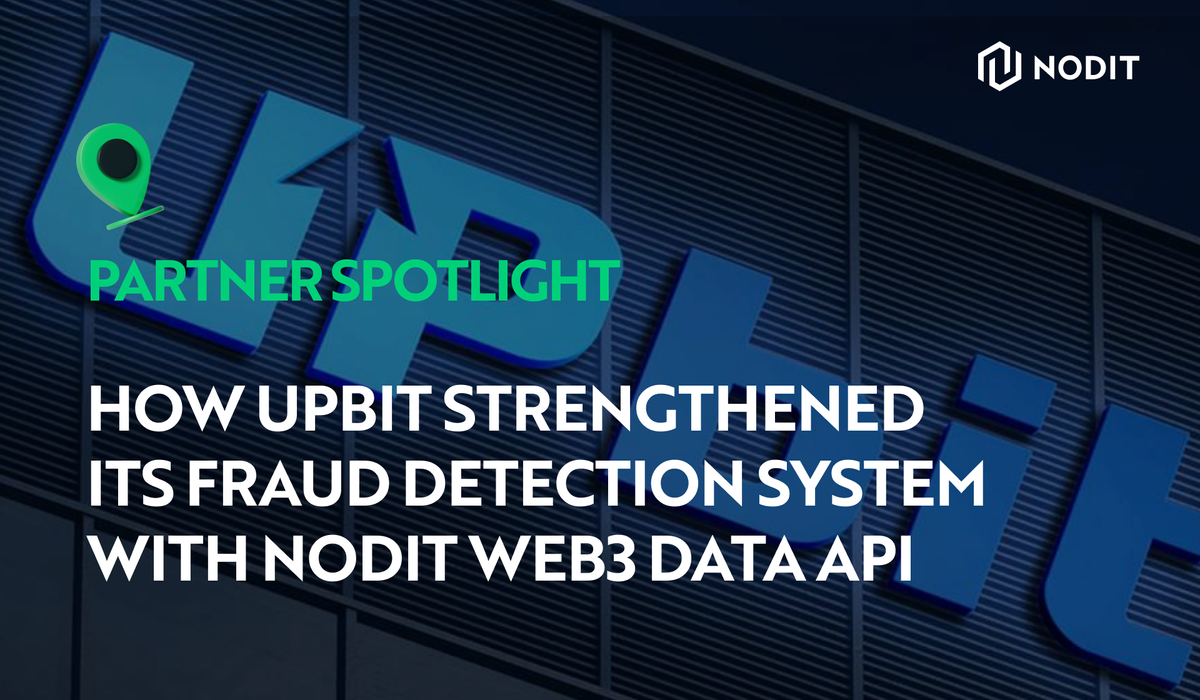
- Case study related to Coinone:
 Nodit Team
2.Backed by Dunamu, Operator of Upbit
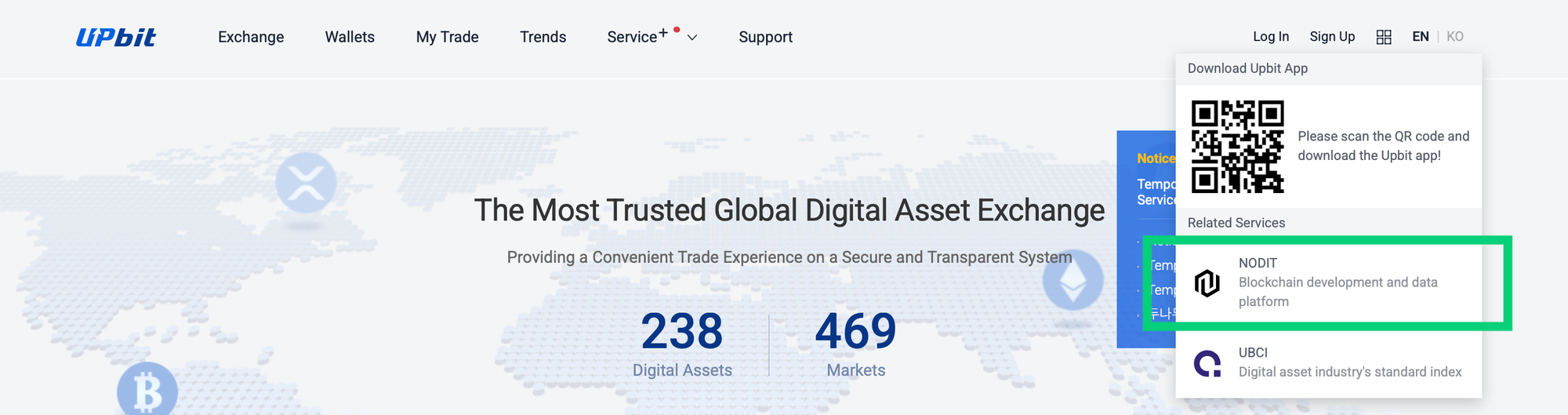
Nodit is operated by Lambda256, a subsidiary of Dunamu which is known as the company behind Upbit. This relationship provides both operational expertise and substantial technical resources, enabling Nodit to design infrastructure capable of meeting the performance, reliability, and governance standards expected in financial markets.
Learn more from Dunamu .
3.Exploring Real-World Stablecoin Payment Use Cases
Beyond exchange infrastructure, Nodit is actively exploring how blockchain systems can integrate with real-world financial services. Through a PoC collaboration with KSNET, one of Korea’s major payment service providers, Nodit is piloting USDC payments on Solana to enable seamless, low-cost transactions for foreign visitors in Korea, demonstrating how stablecoins can connect with existing payment networks.
Learn more: https://www.lambda256.io/en/news/press-release/lambda256-partners-with-ksnet-en
4.Engaging with Regulatory and Legal Experts
Lambda256 is the company behind Nodit — also works closely with regulatory and legal experts to navigate evolving digital asset frameworks. Through a tripartite alliance with Korean law firm Yulchon and consulting firm SAS, the organizations are jointly researching stablecoin and digital asset regulations in Korea, helping institutions better understand regulatory developments and operational considerations.
5.Institutional Security and Governance Standards
Combined with SOC 2 Type II–compliant operational controls, dedicated RPC and node environments, and enterprise-grade security architecture, Nodit helps institutions deploy blockchain infrastructure aligned with the operational resilience, governance, and auditability standards increasingly expected by regulators such as the HKMA.
Learn more: https://blog.nodit.io/building-institutional-grade-infrastructure-nodit-achieves-soc-2-type-ii-compliance/
Preparing for Hong Kong’s Stablecoin Licensing Framework

Hong Kong’s digital asset strategy is steadily moving from policy development toward regulated market implementation.
While stablecoin licensing begins and initiatives such as Project Ensemble continue to evolve, institutions preparing to operate within Hong Kong’s digital asset ecosystem will increasingly need infrastructure environments capable of supporting reliable operations, regulatory transparency, and institutional governance standards.
For organizations preparing to apply for Hong Kong’s stablecoin issuer license, infrastructure readiness will likely become a key part of operational preparation. Nodit helps institutions build blockchain infrastructure environments that align with the operational resilience, governance, and transparency standards expected by regulators such as the HKMA.
🔎About Nodit
Nodit is an enterprise-grade Web3 platform that provides reliable node and consistent data infrastructure to support the scaling of decentralized applications in a multi chain environment. The core technology of Nodit is a robust data pipeline that performs the crawling, indexing, storing, and processing of blockchain data, along with a dependable node operation service. Through its new Validator as a Service (VaaS) offering, Nodit delivers secure, transparent, and compliant validator operations that ensure stability, performance visibility, and regulatory assurance.
By utilizing processed blockchain data, developers and enterprises can achieve seamless on chain and off chain integration, advanced analytics, comprehensive visualization, and artificial intelligence modeling to build outstanding Web3 products.