From Shared to Dedicated: How Rewardy Wallet Scaling from 450K Users to More Than 1M

TL;DR
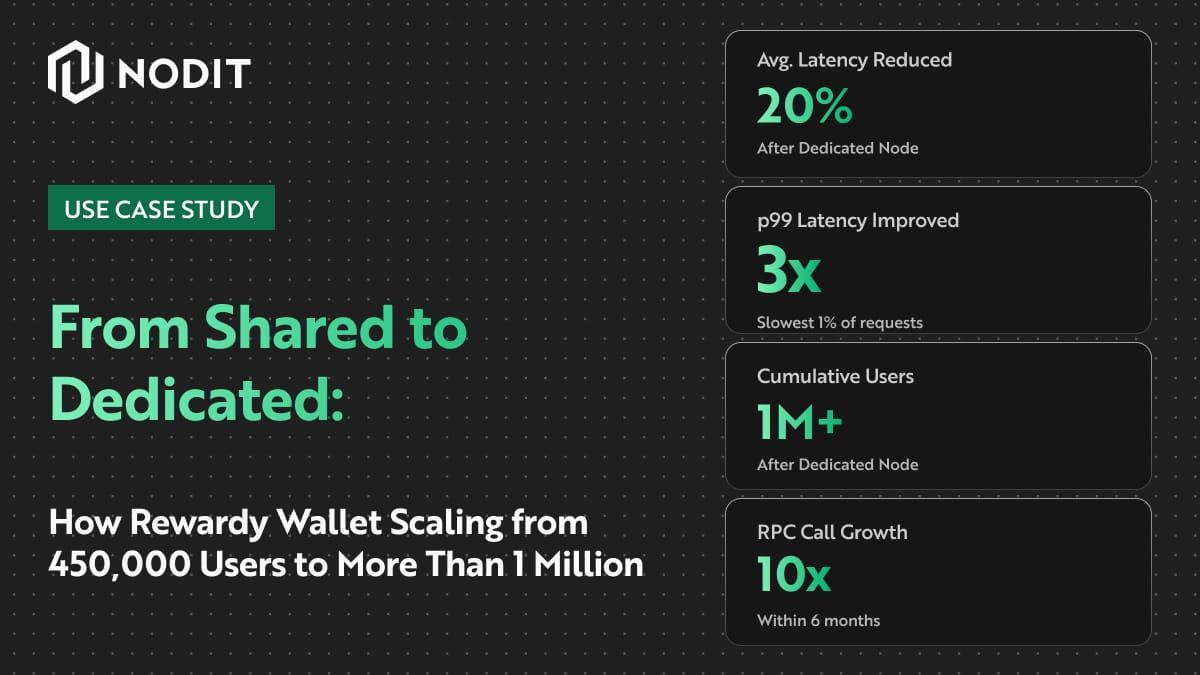
- Rewardy Wallet scaled to over 1 million users while increasing RPC traffic by nearly 10x within six months.
- After moving to dedicated infrastructure, p99 latency improved by approximately 3x while average latency decreased by around 20%.
- Dedicated throughput removed performance variability caused by neighboring workloads and made campaign traffic more predictable.
- Support requests related to slow responses, missing balances, and delayed transactions declined significantly after the Dedicated Node.
- For products where user experience depends on real-time blockchain data, tail latency often becomes a business problem before average latency metrics reveal it.
Most infrastructure dashboards focus on averages. Users do not.
A service can show healthy latency metrics, pass every monitoring check, and still deliver a frustrating experience to a meaningful number of users. At scale, even a small percentage of slow requests can translate into thousands of failed interactions, increased support volume, and reduced user trust.
Rewardy Wallet encountered this challenge as its user base and transaction volume grew. While average performance remained stable, tail latency was increasingly affecting real users. The solution was not additional monitoring or application optimization—it was moving from shared RPC infrastructure to a dedicated environment.
Why Average Latency Stops Telling the Full Story: Rewardy Wallet
Rewardy Wallet is a multi-chain wallet supporting Ethereum and EVM-compatible chains, Solana, Aptos, Tron, and Bitcoin. Built on React Native with a NestJS backend on AWS, it serves users operating across several blockchain ecosystems simultaneously.
Rewardy Wallet started on Nodit's Shared Node plan — well-suited to the demands of their growth phase. In July 2025, they had 450,000 cumulative users. Less than a year later, that number had more than doubled to one million, with monthly active users reaching 100,000 and RPC call volume growing roughly tenfold.

A lot went into that growth: expansion into overseas markets, a restructured marketing approach, UX/UI improvements, and the Gold(XAUT) Mining campaign. But the team points to infrastructure as one of the factors. After moving to Dedicated Node, user experience improved — and both retention and new user acquisition moved with it.

Growing Into a New Infrastructure Category
Shared Node plan supported Rewardy Wallet reliably through their scaling period. As user volume and campaign frequency increased, the team placed greater emphasis on maintaining consistent response times during periods of concentrated traffic.
The issue surfaced during high-traffic windows. The majority of users received normal responses, but approximately 1% experienced delays of 8–10 seconds when checking balances or executing swap operations. System monitoring indicated no anomalies. The user experience told a different story.
The issue was not availability — it was consistency. That distinction drove the decision to move to Dedicated Node.

"The bigger factor was eliminating unnecessary defensive code. Once stability was guaranteed, we could develop with more confidence, without building exception handling into everything just to be safe." — Ian, Frontend Developer, Rewardy Wallet
What Changed After Moving to Dedicated Node From Shared plan
Rewardy Wallet moved into the Dedicated Node plan last year to ensure dedicated infrastructure resources through node isolation and reserved throughput. Across several dimensions, the results were measurable:
Improvement 1: Significant Improvement in Tail Latency
Average latency improved by approximately 20%, but the more meaningful gain was in p99 — the experience for the slowest 1% of requests, which improved roughly threefold. Users who previously waited 8–10 seconds no longer encountered the same delays.
For the engineering team, this resolved a persistent source of complaints that had been difficult to diagnose through standard monitoring alone.
Improvement 2: Predictable Capacity During Campaigns
With dedicated resources, campaign planning became substantially more straightforward. Capacity was reserved specifically for Rewardy's workloads, meaning performance during traffic spikes was no longer influenced by other tenants on shared infrastructure. The recurring pre-launch question — "Can the infrastructure handle this?" — largely disappeared. Support tickets related to delayed responses, missing balances, and pending transactions declined significantly, as did on-call burden during campaign periods.
The following changes were checked directly by the Rewardy Wallet team:
- Average latency decreased by approximately 20% across the platform
- p99 latency improved roughly threefold — directly improving the experience for high-frequency users
- Support inquiries related to response delays declined — including missing balances and pending transactions
- On-call frequency during campaign periods decreased — as infrastructure performance stabilized to a predictable level
With dedicated infrastructure, Rewardy's workloads no longer competed with other tenants for node resources. Performance became a function of Rewardy's own traffic patterns rather than activity occurring elsewhere on the network.
When a Dedicated Node Becomes the Right Fit
This is the question worth being honest about, because dedicated nodes cost more. The Rewardy team's view, based on their experience:
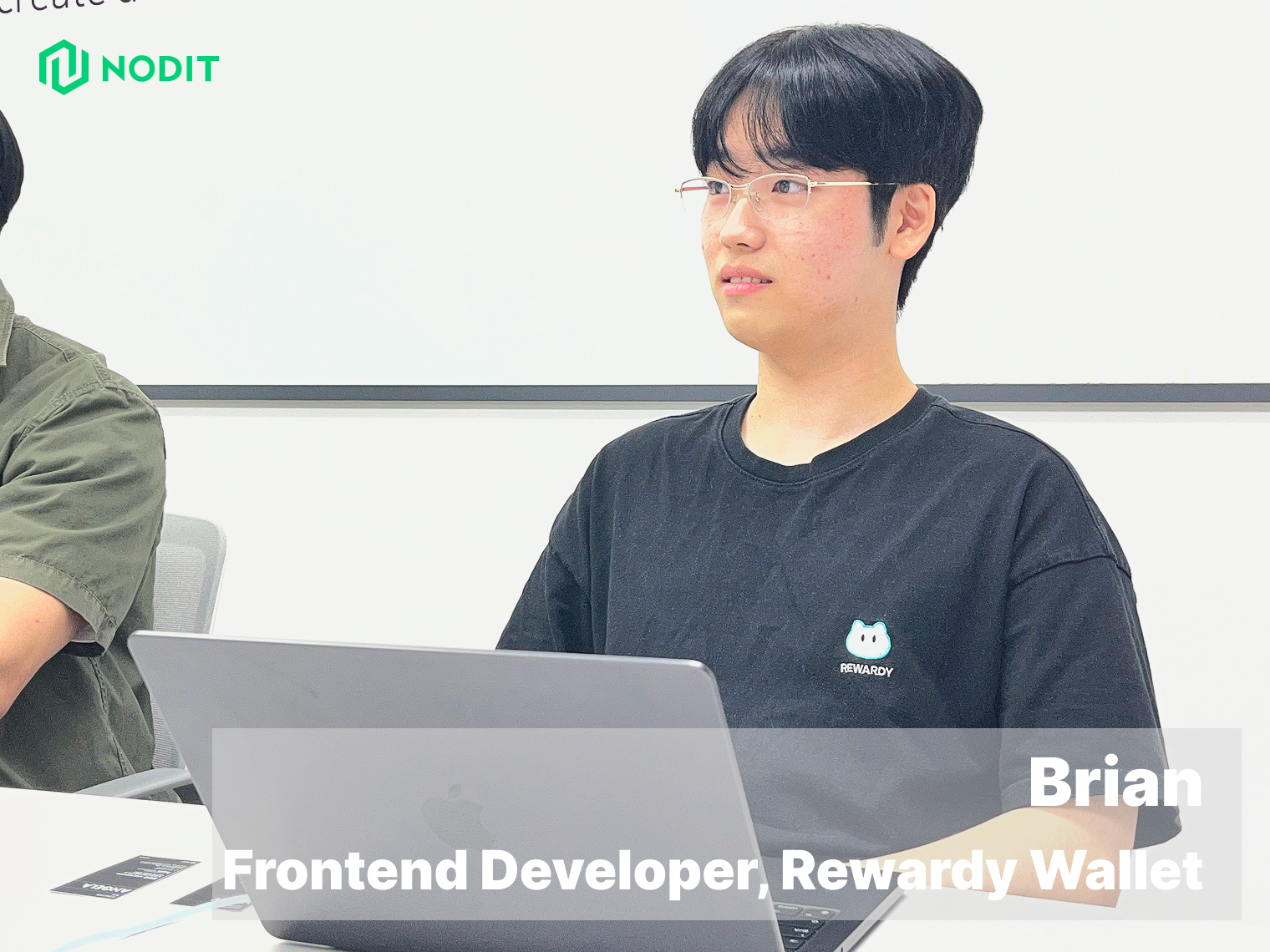
"When infrastructure starts getting in the way of product decisions — that is when you need it. If loading times are affecting user retention and the only thing standing between you and a resolution is the infrastructure, that is the moment to act." — Brian, Frontend Developer, Rewardy Wallet
Several patterns tend to indicate that a Dedicated Node plan warrants consideration:
- Multi-chain services carrying sustained traffic across several networks simultaneously
- Services with fast-growing MAU where tail latency is reaching enough users to affect retention
- Latency-sensitive products — wallets, decentralized exchanges, real-time applications — where slow response times read as product failures
- Campaign-driven operations that require predictable capacity planning rather than reactive adjustment
Ian offered additional context on how the transition changed day-to-day operations:
"Before every campaign, we would check with our backend and infrastructure team — will this handle the load? After moving to Dedicated Node, that became predictable. We could plan around it with confidence." — Ian, Frontend Developer, Rewardy Wallet
As user growth accelerates, infrastructure bottlenecks often appear first in tail latency rather than average performance metrics. When delayed balances, stalled transactions, and campaign-related traffic spikes begin showing up in support tickets, the cost is no longer technical as it becomes a user retention issue.
Support That Matches the SLA
Rewardy Wallet singled out one experience worth noting. When a production anomaly was flagged, the team had a root cause assessment back within five minutes — in local language during the local business hours.
For institutional clients and enterprise teams operating under tight SLAs, timely access to a support team that communicates in their language and timezone is not incidental. It is part of what makes an infrastructure partnership workable in practice.
Growing Into the Right Infrastructure
Rewardy Wallet's experience reflects a pattern common to high-growth Web3 services. For products managing frequent campaigns or focused on accelerating user acquisition, tail latency typically becomes a visible problem before average metrics indicate anything is wrong — because users experience the slowest request, not the mean.
Nodit provides infrastructure designed to support services at every stage of growth, from initial deployment through large-scale operations. Teams currently evaluating whether a Dedicated Node plan is the right fit are welcome to review the details below.
🔎About Nodit
Nodit is an enterprise-grade Web3 platform that provides reliable node and consistent data infrastructure to support the scaling of decentralized applications in a multi chain environment. The core technology of Nodit is a robust data pipeline that performs the crawling, indexing, storing, and processing of blockchain data, along with a dependable node operation service. Through its new Validator as a Service (VaaS) offering, Nodit delivers secure, transparent, and compliant validator operations that ensure stability, performance visibility, and regulatory assurance.
By utilizing processed blockchain data, developers and enterprises can achieve seamless on chain and off chain integration, advanced analytics, comprehensive visualization, and artificial intelligence modeling to build outstanding Web3 products.
Homepage l X (Twitter) l Linkedin
Disclaimer
This article is provided for general informational purposes only. By using the article, you agree that the information on this article does not constitute legal, financial or any other form of professional advice. No relationship is created with you, nor any duty of care assumed to you, when you use this article. The article is not a substitute for obtaining any legal, financial or any other form of professional advice from a suitably qualified and licensed advisor. The information on this article may be changed without notice and is not guaranteed to be complete, accurate, correct or up-to-date.
![[DataShare Insight] On-Chain Data as a Foundation for Market Intelligence](https://storage.ghost.io/c/00/e4/00e497ca-82e8-447b-9af3-b700db69ca26/content/images/size/w600/2026/09/Data-Analyst--_-Blog-Thumbnail.png)
![[DataShare Insight] AI-Ready On-Chain Data for Regulated Enterprises](https://storage.ghost.io/c/00/e4/00e497ca-82e8-447b-9af3-b700db69ca26/content/images/size/w600/2026/09/Group-C-_-AI-Blog-Thumbnail.png)